Sunday, February 28, 2016

HW6.3.2 Animation Artist Research: Michel Gondry

Michel Gondry is a French film director who has directed major motion pictures such as Be Kind Rewind and Eternal Sunshine of the Spotless Mind.  He has also animated music videos for many musicians including The White Stripes, Bjork, and The Chemical Brothers.  The music video that originally made me aware of his work, was the stop motion animation he created for The White Stripe's "Fell in Love With a Girl" in 2002.  The music video was created with thousands of shots of individually built Lego sets and figures.  This work especially highlights the arduous process involved in stop motion animation because in addition to taking each individual photograph of each frame within the video, each figure and scene had to be built and rebuilt, piece by piece for every frame.  The resulting animation is intricately done with fluid movement.  The nature of Legos however, makes the figures appear blocky and pixelated.  This retains the digital element of the work and differentiates it from other animation styles.


Sources:
http://www.michelgondry.com/?tag=the-white-stripes

HW6.3.1 Animation Artist Research: Lorna Mills

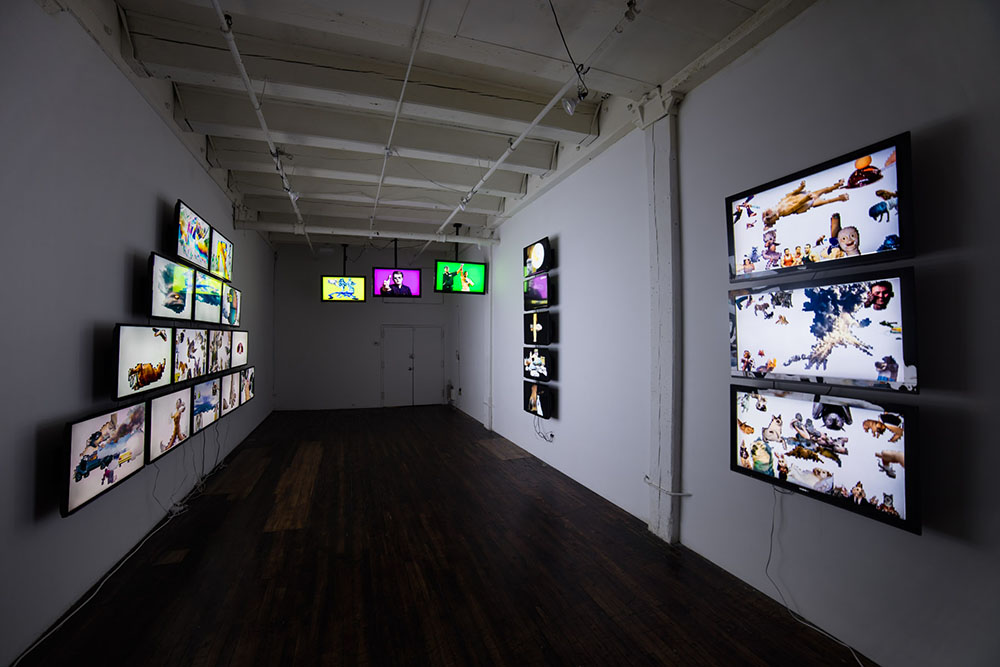
Lorna Mills is a curator and artist who creates Gifs.  She credits the rise of social media as one of the reasons for the popularity of Gifs and has used the communal nature of social media in her art practices.  She is one of the co-creators of the project, Sheros, which was one of the first programs to focus on Gifs in 2011.  Sheros was a series of monthly parties where artists would present Gifs created to honor specific female icons such as Dolly Parton and Yoko Ono.  The event grew in popularity and emphasized the possibilities of Gifs.  One of the benefits of creating Gifs for offline presentation, is that file sizes can be much larger and artists can have much more room for creativity and elaborateness.

Lorna Mills Gifs Exhibition


Sources:
https://news.artnet.com/art-world/will-galleries-and-museums-ever-embrace-animated-gif-art-9650
http://www.digitalmediatree.com/sallymckay/LornaMillsImageDump/

Wednesday, February 24, 2016

Click here to see a book of my scans!

HW5.3 Blank Assignment

For this assignment, we were asked to return to any past assignment in this class and revise it.  Based on our new learned experiences and feedback from our classmates, we were to alter a past work to change it, hopefully for the better.  I decided to return to the digital collage that I made during the second week of this class.  It had been suggested that the work could be improved by filling in all of the blank spaces in the background with more images.  I did this and I think it has definitely made an impact on the work.  The piece is much busier and takes more time to understand.  Some of the figures are almost entirely covered by other images, but I tried to make sure that the kiss or embrace was highlighted where they were seen.  Overall, this was an interesting exercise and I enjoyed returning to a past work, but I am not sure that I like this new version any better than my original work.


Tuesday, February 23, 2016

HW5.2.2 Scanography Artist Research: Thomas McDonnell

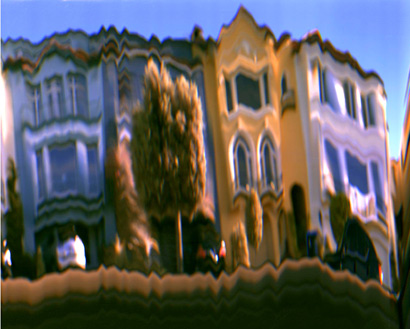
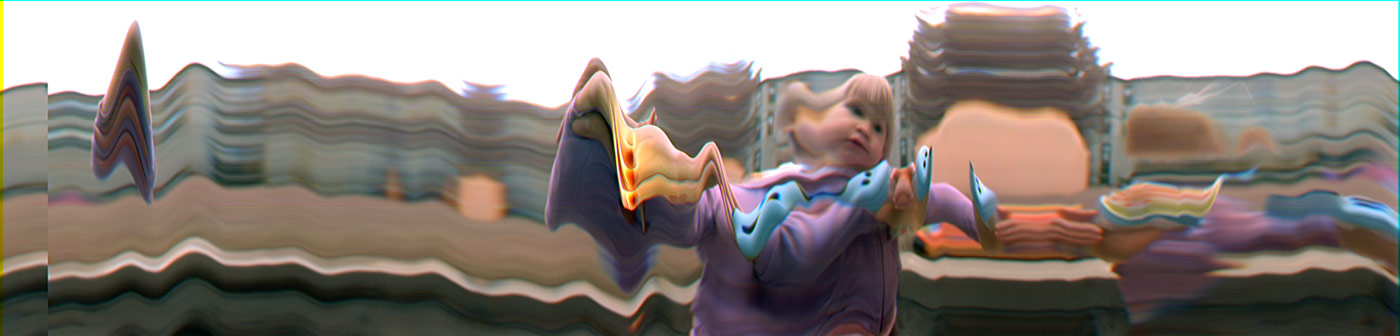
Thomas McDonnell has been a photographer for 20 years and began using the scanner to capture images of flowers.  Later, he experimented with bringing his scanner into the real world.  Instead of bringing objects into the studio to use on the scanner, he brought the scanner outside with him.  Using a battery powered scanner, McDonnell was able to mount the scanner on his car as he drove past houses or place he scanner in front of moving objects, like cars or children.  He enjoys that his works appear to be scans of photographs, but are actually direct scans of real life.  While many artists that use scanners have some photography background, McDonnell treats his scanner exactly as he would his camera.  By taking the scanner into the real world, his works are more grounded in realism and less separated from their subjects.


Sources:
http://www.scannography.org/artists/McDonnell-ThomasW.html
http://www.scannography.org/artists/McDonnell-2.html
HW5.2.1 Scanography Artist Research: Rebecca Wild

Rebecca Wild is an artist that combines traditional art media and digital art media.  She uses her childhood passion for painting as inspiration for her work with scanners.  Wild paints directly onto the scanner bed while she uses heavy-duty tape to ensure that the paint does not leak into the scanner.  She is particularly interested in liquids; how liquids interact with each other and how liquids are an integral part of human existence.   Therefore, she often mixes paint with water or oils on the scanner bed in order to create a more fluid appearance.  Her work may look spontaneous, but she actually uses syringes to precisely apply the paint to the scanner bed.  She also adds a layer of glass to many of her works to seal the paint to the scanner bed and create air bubbles.  Additional layers of paint can be added on top of the glass panes to create depth.  Her work relies on the fluid, watery nature of the paint.  Without the immediate use of the scanner, the paint would eventually dry and the work would be changed forever.

Syringe Paint Application
Before Glass Plane
Glass Plane
After Glass Plane


Sources:
http://www.scannography.org/artists/Wild-Bex.html
http://www.scannography.org/tips/Bex-Wild-tips.html

HW5.1 Scan Series

I really enjoyed this assignment.  Playing with the scanner was so much fun and I found myself continuously pushing the scan button for much longer than I expected.  When I started this assignment, I was planning on laying out lots of different pieces of jewelry in an intricate pattern, but the static images turned out to be very boring.  I much preferred the scans where I moved the objects and created distortions.  I made one series using large fake pearls, fake velvet gloves, and a silk scarf.  The other series is made with tin foil and a box lid with a holographic design.

Ladies Who Lunch


Shiny Things